
Maintenance & oil · Pillar guide
The Tucson Driver's Guide to Mobile Oil Changes and Maintenance
9 min readBy The Mando Guild mechanics
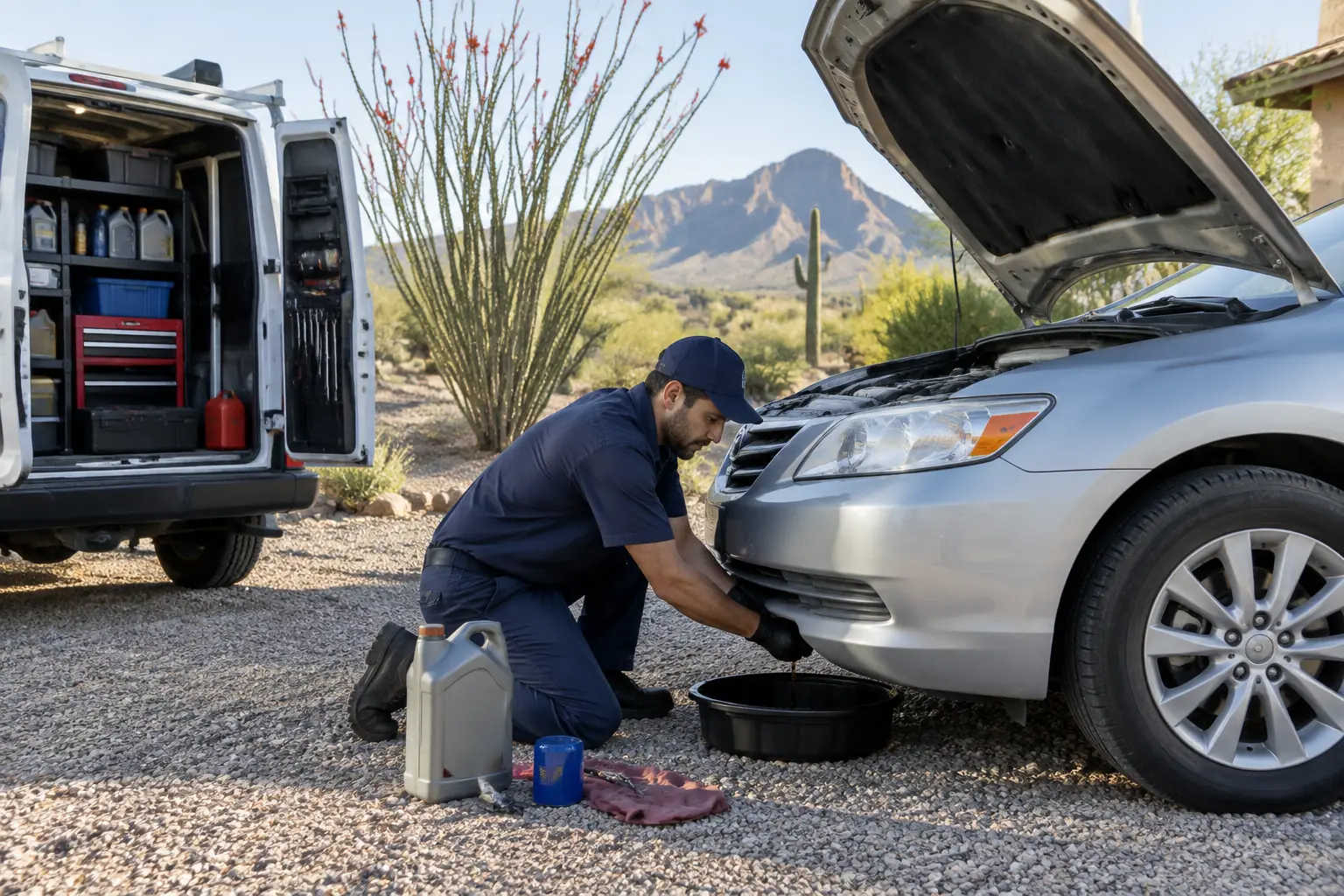
A mobile oil change in Tucson brings routine engine maintenance to your driveway so you do not have to arrange a shop visit. The Mando Guild brings a stocked service van to your home or workplace, checks what your vehicle needs, and provides a written estimate before you approve any work.
How mobile maintenance works in Tucson
Mobile maintenance changes where the work happens, not the need for the correct oil, parts, and procedures. Instead of dropping off your vehicle, you arrange access at a suitable location. For an oil change, the starting information is your vehicle's year, make, model, engine, mileage, and maintenance history. Tell us about leaks, warning lights, unusual noises, or recent repairs when you request service. Those details help distinguish a routine appointment from a problem that needs diagnosis first.
The Mando Guild serves greater Tucson, including Flowing Wells, Amphi, Casas Adobes, Catalina Foothills, Oro Valley, Marana, Midtown, Downtown, South Tucson, and the University of Arizona area. Our registered hub on West Roger Road is not a walk-in shop. We drive to you, so confirm the actual service address rather than planning to bring the vehicle to our hub.
Start with our mobile oil change and maintenance service when you are ready to discuss the vehicle and location. You do not need to choose a package or guess which parts need replacing before contacting us. Explain what is due, what you have noticed, and where the vehicle will be parked.
What happens during your on-site appointment
Every job starts with a diagnosis and a written estimate. For scheduled maintenance, that means establishing what service is appropriate from the vehicle information, available records, current condition, and manufacturer requirements. If you report a symptom, we assess that concern rather than assume an oil change will fix it. Nothing is replaced until you approve the work, and any additional recommendation should be understood before it becomes an authorized repair.
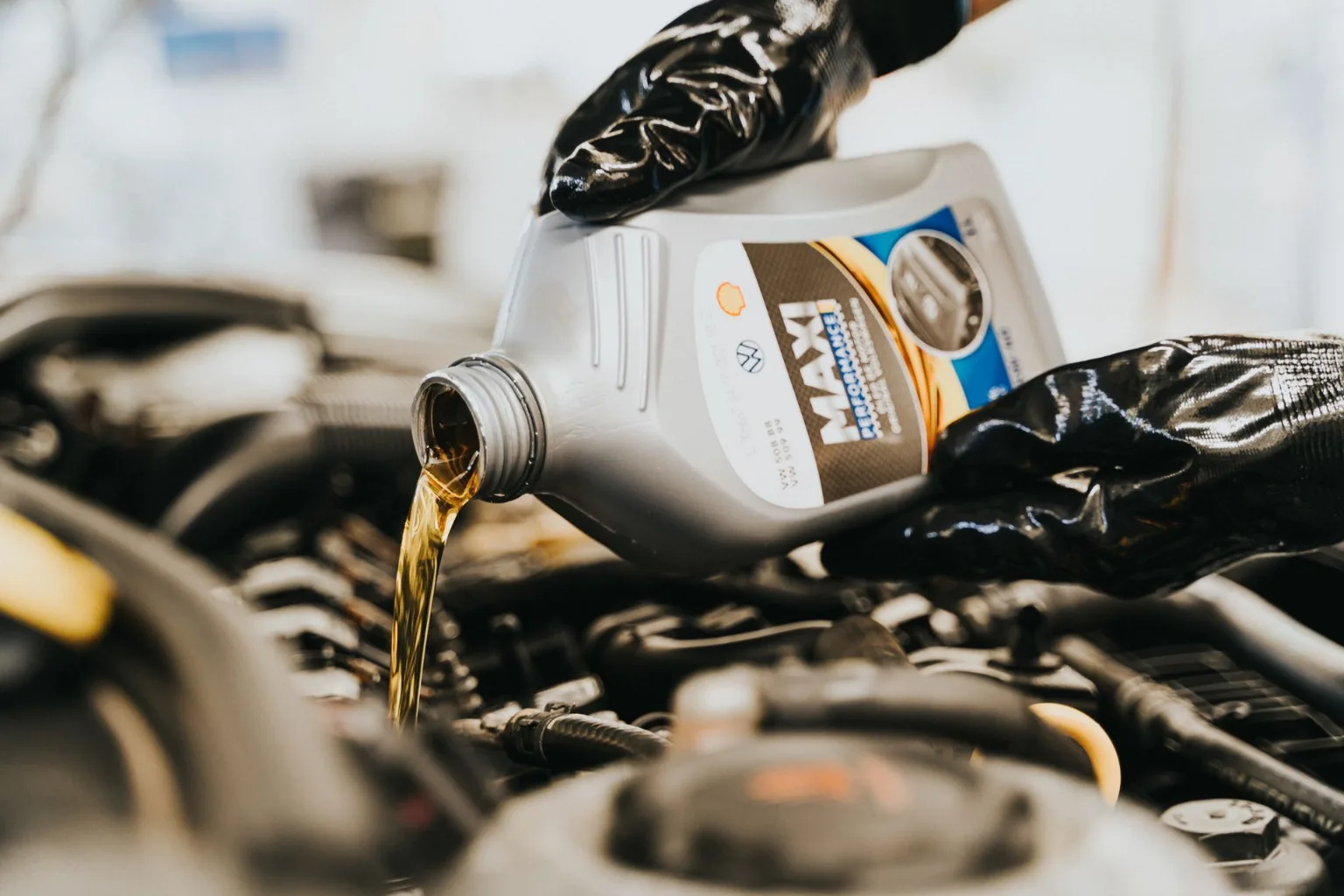
For approved oil service, the work centers on the specified oil and filter, the correct fill quantity, and checks for leaks afterward. We use OEM-grade parts and service most makes and models. Depending on the vehicle and agreed scope, maintenance checks can include accessible fluid levels, filter condition, visible hoses and belts, and signs of leakage. Ask what is included in your estimate rather than assuming every inspection or fluid service comes with an oil change.
Used oil must be collected and managed without contaminating soil, drains, or other materials. Recycling keeps it available for reuse instead of treating it as ordinary trash.[1] Before the appointment ends, keep the service details with your maintenance records so the next decision starts with facts.
Let the owner's manual set the schedule
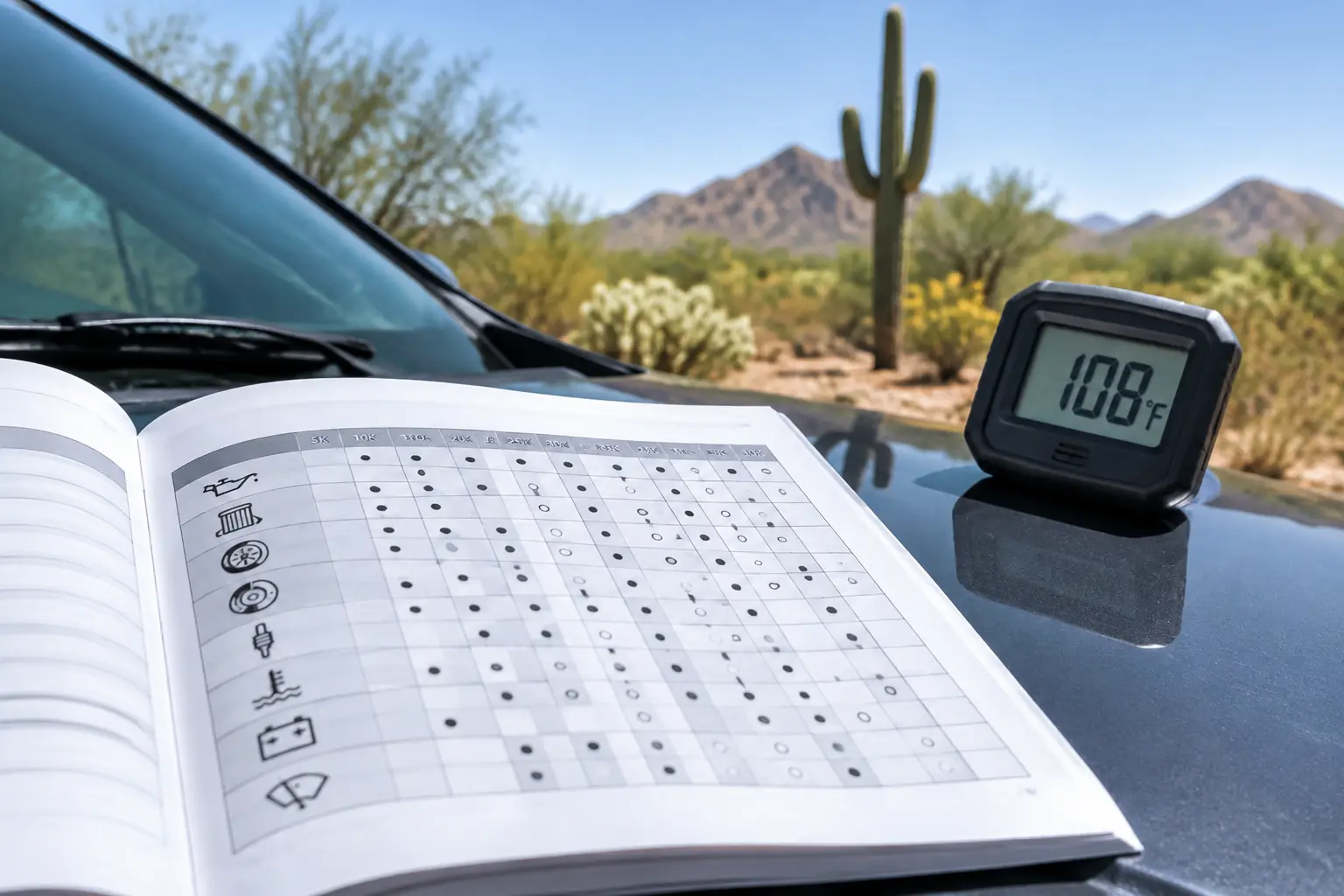
Your owner's manual is the starting point for maintenance intervals and fluid specifications. Mileage alone does not tell the whole story, because many maintenance requirements also have a time limit. Following the manufacturer's schedule is more useful than applying one universal oil-change interval to every car.[2] If your vehicle has an oil-life display, learn what that display monitors and what separate calendar limits the manual still requires.
Tucson driving can involve dusty roads, extended idling, short trips, and heavy loads. Compare your actual use with the manufacturer's severe-service definitions instead of assuming that every Arizona vehicle automatically follows the same shortened interval. Our guide to severe-service schedules in desert heat explains that decision in more detail. Bring the manual or a photo of its maintenance table if you want help interpreting it.
When records are missing, build a baseline rather than approving every possible service at once. Separate overdue scheduled work from condition-based recommendations and unresolved symptoms. A written plan should explain what is known, what still needs checking, and which items can wait until a later appointment.
What Tucson heat means for fluids
Summer highs regularly exceed 100 degrees F in Tucson, making the hot-weather preparation window worth using before your daily drive becomes uncomfortable.[3] Engine oil, coolant, and other fluids have different jobs and different specifications. Maintaining appropriate levels and following the vehicle's service requirements matters more than buying a product simply because its label mentions extreme conditions. Fluid checks and cooling-system attention belong in a routine maintenance plan.[4]
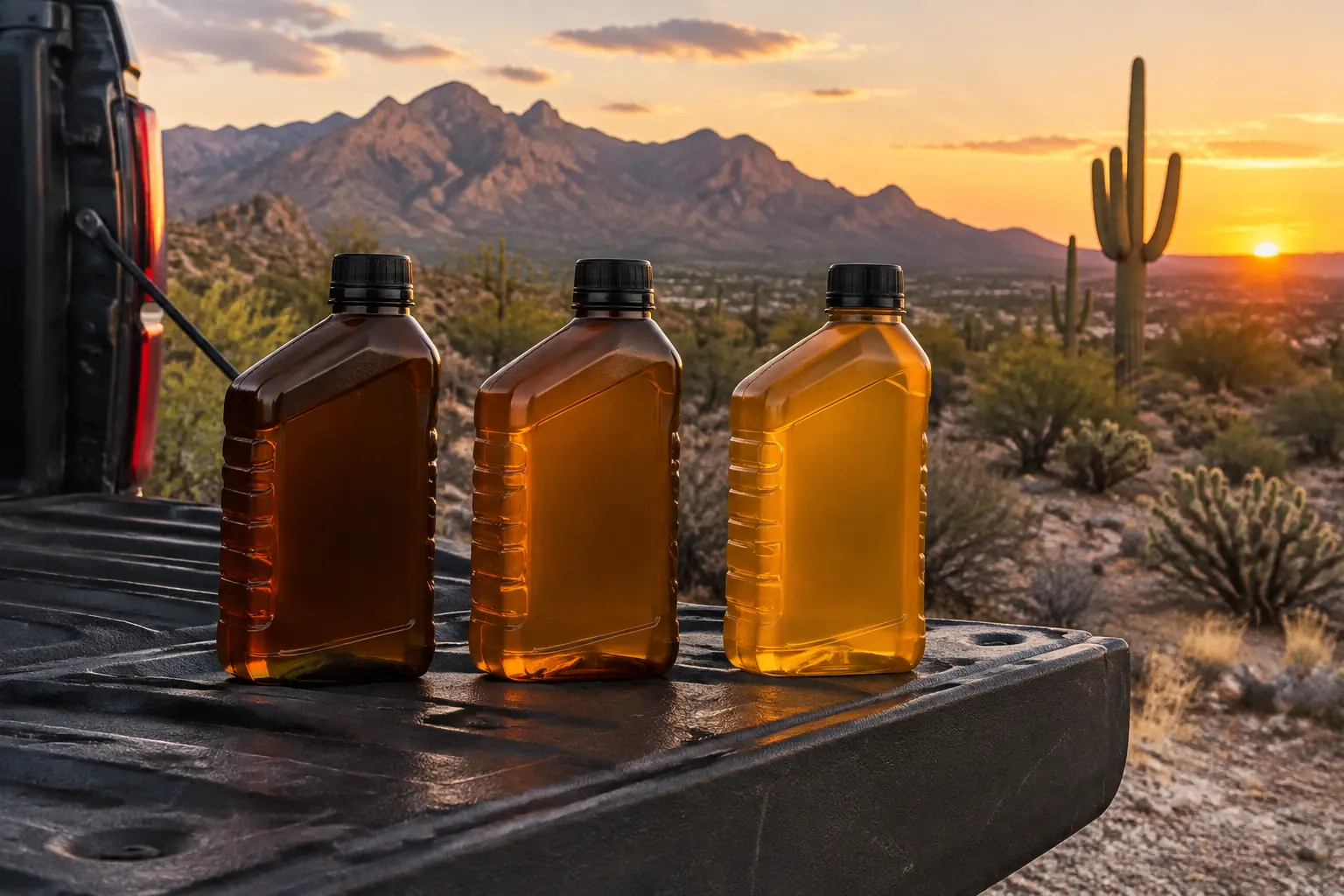
Oil choice should follow the required viscosity and performance specification, not an assumption that thicker oil is automatically better in summer. Our guide to synthetic and conventional oil in Arizona covers the selection questions without turning this overview into an oil-shopping checklist. Tell us what the vehicle currently uses, but do not treat an old windshield sticker as a substitute for the manufacturer's requirements.
Coolant deserves its own review, especially when service history is uncertain or you have noticed a changing level. Our Tucson coolant service guide explains the next steps. Do not treat repeated topping off as a maintenance strategy. A recurring loss needs diagnosis, and a hot cooling system should never be opened casually.
Give filters and rubber a place in the plan
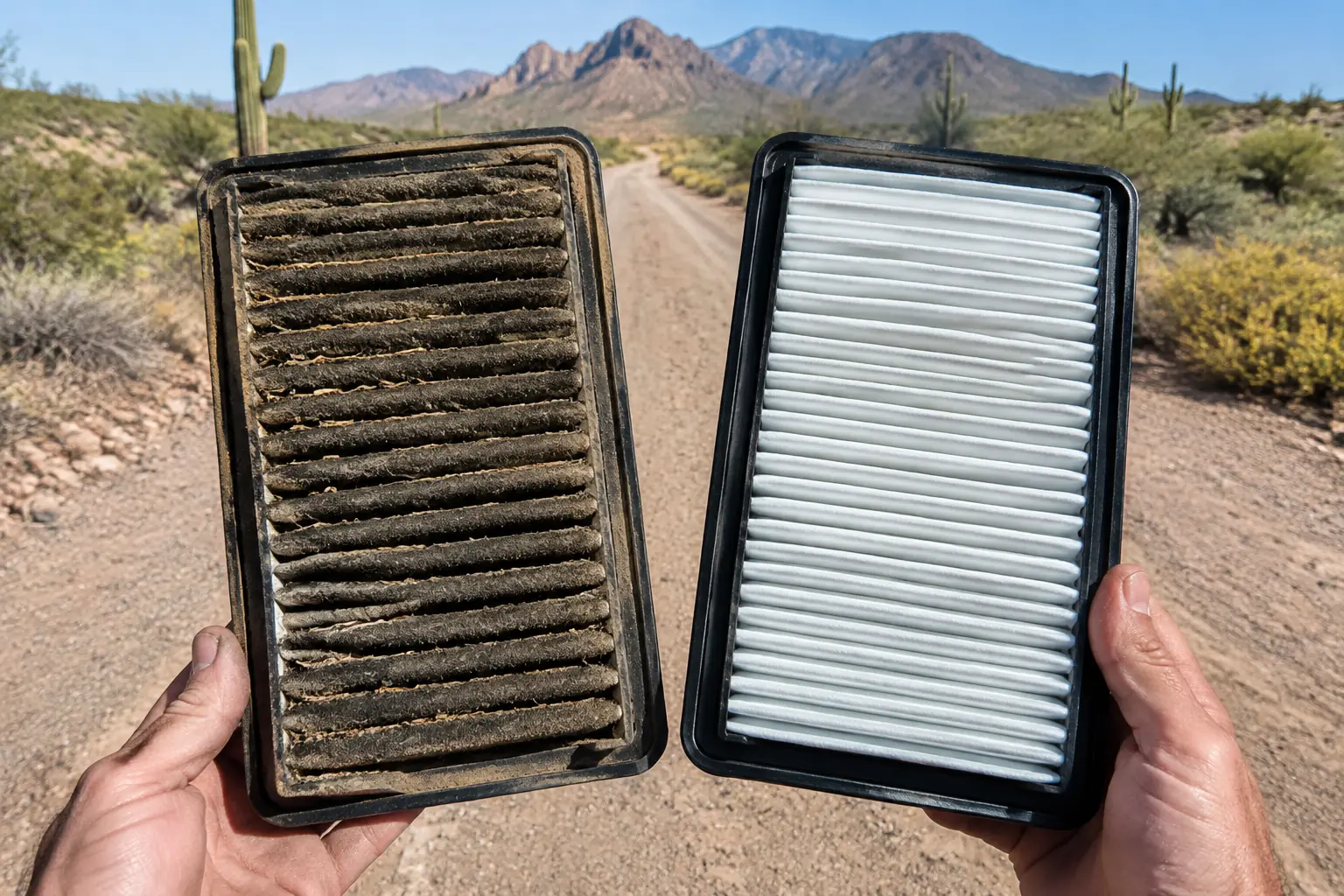
Dust and heat make it useful to look beyond the oil filter. Engine and cabin filters serve different systems, so one clean filter does not establish the condition of the other. Filter inspection and replacement should reflect the manufacturer's guidance and operating conditions.[2] Our guide to air filters in dusty Tucson covers how to make that decision without replacing every filter at every appointment.
Rubber components deserve inspection, too. Belts, hoses, and wiper blades are maintenance items, but they do not share one replacement deadline. Look for condition concerns and follow scheduled requirements rather than assuming that low mileage means everything remains fresh. Routine checks of these components help identify wear before it becomes a breakdown or visibility problem.[4] An inspection can guide a recommendation, although it cannot guarantee the future life of every part.
Include tires in your own between-visit routine. Check pressure when the tires are cold and use the vehicle placard or owner's manual, not the maximum pressure molded into the tire sidewall. Inspect for damage and uneven wear as well.[5] Ask about anything suspicious before planning a longer highway trip.
Use spring to prepare for Tucson summer
Spring is a practical planning window, not an automatic deadline for replacing fluids. Review what will become due during the hottest months, then schedule the work your vehicle actually needs. Gather the last oil-service record, any coolant-service documentation, and notes about changes you have noticed. A small drip, a new smell, or a longer starting attempt gives the mechanic a more useful starting point than a general request to make the car summer-ready.
Think through your upcoming use. A mostly local schedule around Prince Road may change to regular I-10 trips, longer commutes, or hauling equipment. That change is worth discussing before the workload changes. Air conditioning also affects hot-weather fuel use, particularly on short trips, so increased summer fuel consumption does not by itself identify an engine fault.[6] Keep maintenance decisions separate from guesses based on one tank of fuel.
Set reminders for both mileage and dates, and leave room for follow-up if an inspection finds a concern. Preventive scheduling works better when you can review an estimate without the pressure of an imminent departure. Do not wait until the morning of a road trip to investigate an existing warning.
Plan around monsoon weather on Grant and Speedway
Tucson's official monsoon season runs from June 15 through September 30.[3] Use that calendar as a reminder to review visibility equipment and appointment access before storms begin interrupting ordinary routines. Wiper blades, washer operation, and exterior lights deserve attention before the first rainy commute along Grant Road or Speedway Boulevard. The separate maintenance topic, Wiper Blades, Washer Fluid and the Tucson Monsoon, covers that preparation in detail.
Mobile work also needs a suitable setting. When scheduling, describe the parking surface, available space, and any access restrictions. A driveway that works on a dry morning may need reassessment during a storm. Be prepared to discuss another location or appointment time if conditions make outdoor service unsuitable. An oil change is planned maintenance, so there is no reason to force it into an unsafe weather window.
Keep the distinction between maintenance and weather safety clear. Fresh wipers do not make a flooded roadway safe, and you should never drive into floodwater.[7] If weather prevents access to the vehicle, contact us rather than trying to move it through standing water just to preserve an appointment.
Use fall and winter to review the year's wear
After summer, review the maintenance record against the mileage you actually drove. A planned interval may arrive sooner after extra travel, or the calendar limit may arrive first on a lightly used car. Fall is a useful point to revisit fluid levels, tires, lights, and visibility equipment instead of assuming that cooler weather ends maintenance needs. These checks belong to year-round vehicle care.[2]
Winter is also a good time to organize the next year's schedule. Put receipts in one place and record the date, odometer reading, oil specification, and services performed. Note recommended work separately from completed work. That distinction prevents an estimate from being mistaken for proof that a service happened. If more than one person drives the vehicle, agree on who tracks reminders and reports new symptoms.
Seasonal residents should account for time parked as well as miles driven. Returning to a vehicle after months away calls for a condition review, not simply restarting the old commute. The maintenance article Snowbird Car Storage: Waking a Car Up After a Tucson Summer addresses that situation. Tell us how long the car sat and what you observed when you returned.
Make workplace maintenance easier to arrange
A workplace appointment can reduce the need to rearrange your transportation, but permission and access come first. Ask the property manager or employer about vehicle service in the parking area. Then share any gate instructions, parking restrictions, or vehicle-access arrangements with us. The maintenance topic Getting Your Car Serviced While You Work in Tucson focuses on those logistics. Do not assume that an open parking space is automatically an approved work area.
Keep a reachable contact available during the appointment. Diagnosis may reveal that the requested work needs a different scope, and approval is required before anything is replaced. If you cannot answer calls during work, discuss how you will review the written estimate beforehand. Clear communication matters more than trying to fit an uncertain repair into a rigid break period.
Describe symptoms instead of ordering a vague tune-up. Modern maintenance varies by vehicle, and the phrase can mean different things to different drivers. What a Tune-Up Means in Tucson Today addresses that topic separately. For this appointment, provide the mileage, service records, and your concern so the proposed work can be specific and understandable.
Build your next maintenance visit around priorities
Start your plan with three categories: scheduled maintenance that is due, condition concerns that need assessment, and symptoms that require diagnosis. This keeps routine oil service from becoming a catchall explanation for every problem. Tell us about warning lights or abnormal operation when booking, even if your main reason for calling is an oil-change reminder. We can discuss the appropriate service scope rather than discovering those concerns only after arrival.
Next, choose a location and gather the vehicle information. You do not have to diagnose the car yourself or commit to replacing parts before an assessment. The Mando Guild provides a written estimate, uses OEM-grade parts, and waits for your approval. Keep the completed service record afterward, then update your reminders using the applicable manufacturer requirements rather than a generic interval.
Our mobile service is designed for Tucson owners who want maintenance explained and performed where the vehicle can be safely serviced. We do not operate a walk-in shop, and roadside help is available only during business hours. Call (520) 704-0441 or request service Monday through Friday, 8 a.m. to 5 p.m.
Sources
- U.S. Environmental Protection Agency, "Managing, Reusing, and Recycling Used Oil." www.epa.gov/recycle/managing-reusing-and-recycling-used-oil (opens in a new tab)
- Consumer Reports, "Your Car Maintenance Checklist." www.consumerreports.org/cars/car-repair-maintenance/your-car-maintenance-checklist-a6808357212/ (opens in a new tab)
- National Weather Service, Tucson, "NWS Tucson Forecast Office." www.weather.gov/twc/ (opens in a new tab)
- Car Care Council, "Car Care Guide." www.carcare.org/car-care-guide/ (opens in a new tab)
- National Highway Traffic Safety Administration, "Tires." www.nhtsa.gov/equipment/tires (opens in a new tab)
- U.S. Department of Energy, FuelEconomy.gov, "Fuel Economy in Hot Weather." www.fueleconomy.gov/feg/hotweather.shtml (opens in a new tab)
- National Weather Service, "Turn Around Don't Drown." www.weather.gov/safety/flood-turn-around-dont-drown (opens in a new tab)
FAQ
Quick answers
Keep reading
 9 min readDoes Tucson Heat Put Your Car on the Severe Service Schedule?Learn how Tucson heat, dust, and short trips affect your car's maintenance schedule and where to find the right intervals.Read more: Does Tucson Heat Put Your Car on the Severe Service Schedule? →
 9 min readChoosing the Right Engine Oil for Tucson Summer HeatLearn how oil chemistry, viscosity, and your engine's specifications guide the right oil choice for Tucson summer driving.Read more: Choosing the Right Engine Oil for Tucson Summer Heat →
 9 min readWhen Tucson Dust Means Your Air Filters Need ChangingLearn when Tucson dust calls for engine and cabin filter checks, what symptoms mean, and how mobile replacement works.Read more: When Tucson Dust Means Your Air Filters Need Changing →